1. Introduction
Type 1 diabetes is a chronic condition that requires diligent management of blood sugar levels through a combination of insulin therapy, diet, and lifestyle choices. Unlike type 2 diabetes, which can often be managed with lifestyle changes and medications, type 1 diabetes mandates that individuals take insulin to control their blood glucose levels. This is because the pancreas in people with type 1 diabetes produces little to no insulin, a hormone necessary for glucose to enter cells and be used for energy. This lifelong condition can be challenging, as it demands constant attention and adjustment to manage blood sugar levels effectively, preventing complications that can arise from poor control.
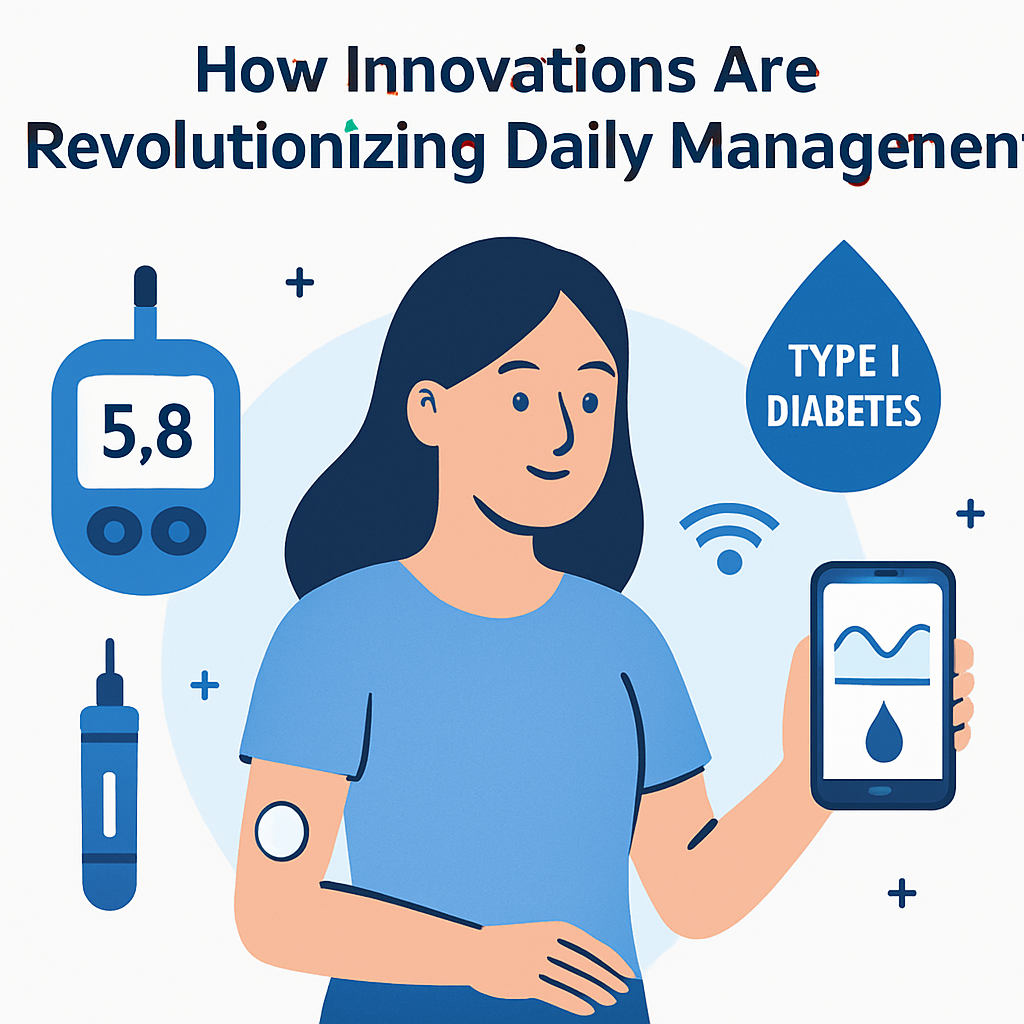
In recent years, technological advancements have begun to revolutionize how individuals manage type 1 diabetes daily. From continuous glucose monitors (CGMs) to insulin pumps and smartphone apps, technology is playing an increasingly vital role in helping people with type 1 diabetes maintain tighter control over their condition. These innovations are designed to make monitoring and managing blood sugar levels more convenient and accurate, potentially reducing the burden of the condition for many. For instance, CGMs provide real-time blood sugar readings and trends, allowing for quicker and more informed decision-making about insulin dosing and dietary choices.
The integration of technology into diabetes management doesn’t just stop at monitoring. Automated insulin delivery systems, which combine CGMs with insulin pumps, offer a more seamless approach to maintaining blood glucose levels within a target range. Known as hybrid closed-loop systems, these devices can automatically adjust insulin delivery based on blood sugar readings, minimizing the guesswork often associated with manual insulin injections. While these technologies hold great promise, they are not a one-size-fits-all solution. It’s important for individuals to work closely with their healthcare providers to determine the best management tools for their specific needs and circumstances.
As technology continues to evolve, so too does its potential to improve the quality of life for those living with type 1 diabetes. However, it’s crucial to remember that while these innovations can offer significant benefits, they should complement, not replace, the guidance and personalized care provided by healthcare professionals. Anyone considering integrating new technology into their diabetes management plan should consult their doctor to ensure it aligns with their overall treatment goals and lifestyle preferences. By staying informed and working collaboratively with healthcare providers, individuals with type 1 diabetes can navigate these new tools effectively and safely.
2. Medical Overview
Type 1 diabetes is a chronic condition characterized by the body’s inability to produce insulin, a hormone crucial for regulating blood glucose levels. This autoimmune disorder typically emerges in childhood or young adulthood, although it can develop at any age. Insulin is produced by the beta cells in the pancreas, and in individuals with type 1 diabetes, the immune system mistakenly attacks and destroys these cells. As a result, people with type 1 diabetes require lifelong insulin therapy to manage their blood sugar levels effectively.
Managing type 1 diabetes involves balancing insulin administration, dietary intake, and physical activity to maintain blood glucose within a target range. This can be a complex and demanding task requiring constant vigilance and adaptation. The development of hypoglycemia (low blood sugar) or hyperglycemia (high blood sugar) poses significant health risks and requires prompt attention. Hypoglycemia can cause symptoms like shakiness, confusion, or even seizures, while hyperglycemia can lead to fatigue, blurred vision, and, over time, serious complications such as cardiovascular disease, nerve damage, or kidney issues.
In recent years, technological advancements have significantly transformed the management of type 1 diabetes, offering new tools to help individuals better control their condition. Continuous glucose monitors (CGMs), for instance, provide real-time data on blood sugar levels, allowing for more precise adjustments in insulin dosing. Insulin pumps have also become smarter and more intuitive, offering features like automated insulin delivery systems that adjust the rate of insulin release based on CGM readings. Such innovations aim not only to improve blood glucose control but also to reduce the daily burden of diabetes management.
Moreover, mobile applications and digital platforms now play a pivotal role in diabetes care. These technologies support tracking of blood sugar levels, insulin doses, and carbohydrate intake, and offer reminders for medication or alerts for unusual glucose trends. They can also facilitate communication with healthcare providers, allowing for more personalized and timely medical advice. However, while these technologies offer promising benefits, they are not a one-size-fits-all solution. The effectiveness and suitability of these tools can vary among individuals, and it is crucial for each person to work closely with their healthcare team to determine the best approach for their specific needs.
Overall, while technology is revolutionizing the management of type 1 diabetes, it is essential for individuals to remain actively engaged in their care and to consult healthcare professionals for personalized guidance. As research continues and technology evolves, the future holds exciting possibilities for further enhancing the quality of life for those living with type 1 diabetes.
3. Practical Guidance
Incorporating technology into the management of type 1 diabetes can offer practical benefits and enhance daily routines. One of the most significant advances is the availability of continuous glucose monitors (CGMs). These devices provide real-time glucose readings, allowing for more informed decision-making. For example, with CGMs, individuals can track how certain foods, activities, or stress levels affect their glucose levels and make adjustments as needed. It’s important to regularly calibrate and maintain these devices according to the manufacturer’s recommendations to ensure accuracy. Consulting with a healthcare provider can help determine the best CGM system for personal needs and how to interpret the data effectively.
Another valuable technological tool is the insulin pump. These devices can deliver precise amounts of insulin throughout the day, closely mimicking the body’s natural insulin release. Many modern pumps now integrate with CGMs to adjust insulin delivery based on current glucose levels automatically. This closed-loop system, often referred to as an “artificial pancreas,” can help maintain more stable blood glucose levels. However, it’s crucial to receive thorough training on using an insulin pump and to work with a healthcare provider to adjust settings as needed, especially when starting on new devices.
Smartphone apps have also become indispensable in diabetes management. These apps can log food intake, physical activity, and glucose levels, providing a comprehensive overview of daily patterns. Some apps offer features that can help set reminders for insulin doses or blood glucose checks. While these tools can enhance self-management, it’s essential to choose apps that are reliable and have positive user reviews. Privacy considerations should also be taken into account, ensuring that any personal health data shared with apps is secure.
Despite these technological advances, it’s important to remember that devices can sometimes malfunction or provide inaccurate readings. Regularly checking the equipment and having backup supplies, such as a traditional blood glucose meter and insulin pens, is a prudent strategy. In situations where glucose readings are unexpectedly high or low, verify with a different method if possible, and take necessary action to treat any immediate issues, like hypoglycemia, before continuing with daily activities.
While technology can significantly aid in the management of type 1 diabetes, it’s not a replacement for professional medical advice. Regular consultations with healthcare providers are vital to ensure that the chosen technologies are used effectively and that the overall management plan is well-suited to individual health goals. Each person’s diabetes journey is unique, and these tools should be viewed as part of a comprehensive care plan tailored to individual needs. By staying informed and working closely with healthcare teams, individuals with type 1 diabetes can make the most of technological advancements to support their health and well-being.
4. Practical Tips
In today’s fast-paced world, managing type 1 diabetes can be a demanding task, but technological innovations offer practical tools to ease this burden. One of the most significant advancements is continuous glucose monitoring (CGM) systems. Unlike traditional finger-prick tests, CGMs provide real-time glucose readings, allowing individuals to track their blood sugar levels continuously throughout the day and night. This can help identify patterns and fluctuations that might otherwise go unnoticed, potentially reducing the risk of complications. However, it’s crucial for users to consult with their healthcare providers to ensure that the CGM is appropriately calibrated and used effectively in their daily management plan.
Another technological boon for type 1 diabetes management is the integration of smartphone apps with diabetes devices. Many apps are designed to sync with glucose meters or insulin pumps, offering users an easy way to log data, set reminders, and even share information with their healthcare team. These apps can provide insights into how different foods, activities, and stress levels affect blood glucose levels, empowering users to make informed decisions. Again, it’s important to note that while technology can offer valuable support, it should be used in conjunction with professional medical advice tailored to individual needs.
Automated insulin delivery systems, often referred to as “artificial pancreas” systems, represent a significant leap forward in diabetes care. These systems combine CGMs with insulin pumps to automatically adjust insulin delivery based on real-time glucose readings. By mimicking some functions of a healthy pancreas, they can help maintain more stable blood sugar levels. While these systems can simplify diabetes management, users should be aware that they require a period of adjustment and regular consultation with their healthcare provider to optimize settings and ensure safety.
While technology can greatly aid in managing type 1 diabetes, it is important to remember that each person’s diabetes journey is unique. What works well for one person may not be the best option for another. Therefore, it is essential for individuals to work closely with their healthcare team to determine the most appropriate technology and strategies for their specific circumstances. This collaborative approach can help ensure that technological tools are used effectively and safely as part of a comprehensive diabetes management plan.
5. Expert Opinions
In the realm of type 1 diabetes management, expert opinions are increasingly focused on the transformative potential of technology. Many healthcare professionals recognize that innovative tools, such as continuous glucose monitors (CGMs) and insulin pumps, can significantly streamline the daily management of this chronic condition. These technologies are designed to provide real-time data and more precise insulin delivery, which may help individuals better manage their blood glucose levels. While not a one-size-fits-all solution, these devices can offer a level of convenience and accuracy previously unattainable with traditional methods.
Clinicians generally recommend that individuals with type 1 diabetes consider integrating technology into their treatment plans, provided they are comfortable and able to manage these tools effectively. For some, technology may mean fewer instances of unpredictable blood sugar levels and a reduced risk of both hyperglycemia and hypoglycemia. However, experts also stress that the success of these technologies depends significantly on proper usage and regular monitoring. Patients are advised to maintain open communication with their healthcare provider to tailor technology use to their unique lifestyle needs and medical conditions.
Moreover, experts are also optimistic about the role of artificial intelligence and machine learning in further enhancing diabetes management. These advanced technologies have the potential to predict blood sugar fluctuations based on patterns in data collected by CGMs and other devices. While still in developmental stages, such innovations could lead to more personalized and proactive management strategies in the future.
On the other hand, healthcare professionals caution that while technology offers promising benefits, it is not without challenges. The learning curve associated with new devices, the need for regular maintenance, and the potential for technical malfunctions are aspects that require careful consideration. Experts often encourage individuals to explore these options in consultation with their endocrinologist or diabetes specialist, ensuring that any technological additions complement their overall treatment strategy.
Ultimately, expert opinions underscore the importance of a balanced approach. While technology can significantly enhance care, it should be viewed as a component of a comprehensive treatment plan that includes diet, exercise, and regular medical check-ups. Individuals are encouraged to remain informed about the latest technological advancements and discuss them with their healthcare team to determine the best fit for their needs. As always, personal medical advice should be sought from a medical professional to ensure safe and effective diabetes management.
6. Misconceptions
When it comes to understanding type 1 diabetes, misconceptions are unfortunately common, and they can often cloud the reality of living with this condition. One prevalent misconception is that people with type 1 diabetes caused their own disease through poor lifestyle choices. In truth, type 1 diabetes is an autoimmune condition where the body’s immune system mistakenly attacks insulin-producing beta cells in the pancreas. Unlike type 2 diabetes, which is more closely linked to lifestyle factors, type 1 diabetes is not preventable or reversible with lifestyle changes.
Another misconception revolves around the management of type 1 diabetes. Many people believe that managing type 1 diabetes is as simple as taking insulin and monitoring blood sugar levels, but the reality is far more complex. Type 1 diabetes management is a constant balancing act that requires regular monitoring of blood glucose levels, carbohydrate counting, and adjusting insulin doses based on various factors, including physical activity and stress. Emerging technologies, such as continuous glucose monitors (CGMs) and insulin pumps, can aid in this process, but they are not a cure. They require proper setup, regular maintenance, and a good understanding of how to interpret the data they provide.
There’s also a misconception that those using technology like insulin pumps or CGMs have an easier time managing their diabetes. While technology can certainly improve the quality of life and provide more data for making informed decisions, it also introduces new challenges. Users need to learn how to use these devices properly, deal with potential technical issues, and understand the data they generate. It’s important to recognize that these tools are part of a broader management strategy, which still demands careful attention and personalized adjustments.
Finally, a significant misconception is that technological advancements make healthcare professionals less necessary. While technology can enhance diabetes management, it doesn’t replace the need for regular consultations with healthcare providers. These professionals are crucial for tailoring treatment plans, interpreting complex data, and providing support and guidance. Innovations in technology may reduce some burdens, but they don’t eliminate the need for professional care. As always, it’s essential for individuals to work closely with their healthcare team to determine the best approach for their specific situation. If you have questions or concerns about managing type 1 diabetes or using new technologies, consulting with a healthcare provider is always recommended.
7. Summary
In recent years, the landscape of type 1 diabetes management has been significantly transformed by technological advancements. From continuous glucose monitors (CGMs) to insulin pumps, these innovations offer a more dynamic and responsive approach to managing blood sugar levels. This section provides a summary of how technology is reshaping the daily lives of those living with type 1 diabetes, potentially leading to more stable glucose control and improved quality of life.
Continuous glucose monitors have become a cornerstone in diabetes care by providing real-time data on blood sugar levels. Unlike traditional finger-prick tests, CGMs offer the convenience of continuous monitoring, allowing individuals to make timely and informed decisions about their insulin needs. This technology not only aids in identifying trends and patterns in glucose fluctuations but also alerts users to potential episodes of hypoglycemia or hyperglycemia, often before they become symptomatic. However, while CGMs can enhance glucose management, they are not a substitute for professional medical advice and should be used in conjunction with regular consultations with healthcare providers.
Insulin pumps further complement the use of CGMs by delivering a steady stream of insulin tailored to a person’s specific needs. Many modern pumps can be integrated with CGMs to create a semi-automated system, often referred to as a “closed-loop” or “artificial pancreas,” which adjusts insulin delivery based on real-time glucose readings. This can potentially reduce the burden of frequent insulin injections and manual dose calculations. Nevertheless, individual responses to insulin therapy can vary, and users should work closely with their healthcare professionals to optimize their pump settings and usage.
Telemedicine is another area where technology is making a substantial impact. With the convenience of remote consultations, individuals with type 1 diabetes can access expert advice and support without geographical constraints. This can be particularly beneficial for ongoing diabetes education and for making adjustments to treatment plans as needed. While telemedicine offers significant advantages, it is important to maintain regular in-person visits as recommended by healthcare providers to ensure comprehensive care.
The integration of smartphone apps and wearable devices into diabetes management strategies is also growing. These tools can track dietary intake, physical activity, and medication adherence, providing users with a holistic view of their lifestyle and its impact on blood sugar levels. By encouraging more informed decision-making, these technologies can support better diabetes management. However, as with all digital health tools, it is essential to ensure that the information they provide is validated and used in conjunction with professional medical guidance.
As technology continues to evolve, it holds the promise of making type 1 diabetes management less burdensome and more effective. While these innovations offer exciting possibilities, they are not a one-size-fits-all solution. Individuals should always consult their healthcare providers to determine the best approach tailored to their unique needs and circumstances. Technology, when combined with expert medical care, may significantly enhance the ability to manage type 1 diabetes effectively.